Kilcullen Science and Engineering

Showing posts with label podcasts. Show all posts

Tuesday, February 24, 2026

Science Friday Podcast — Jim Lovell Interview

NASA astronaut Jim Lovell in a space suit
NASA astronaut Jim Lovell, photographed in 1969. Image credit: NASA, public domain, via Wikimedia Commons

The late Jim Lovell, commander of the ill-fated Apollo 13 mission talks with Ira Flatow of SF in an interview from 1995.
Apollo 13 was the seventh crewed mission and would have been the third operation to land humans on the Moon. However an explosion in an oxygen tank caused loss of electrical power and cut short the mission. The crew had to slingshot the spacecraft around the Moon to gain enough momentum to get back to Earth. In the interview, Jim explained the details of the event, we hear recordings of radio comms between flight control and the the spacecraft and Commander Lovell answers questions from callers. 

Wednesday, December 10, 2025

Big Picture Science Podcast: A Real Gas

Created by Grok

Did you know, some gasses have a colour (like chlorine), many are invisible and have have no taste or smell (such as oxygen and nitrogen), and yet others are totally unreactive—the noble gasses, such as neon, argon and xenon? Also steam is an invisible gas. The stuff we see coming out of a kettle is condensed steam, but close to 100 degrees Celsius.
In this episode, Mark Miodownik – Professor of materials and society at the University College London and the author of It’s a Gas: The Sublime and Elusive Elements That Expand Our World, talks with executive producer of BPS, Molly Bentley.

Thursday, May 29, 2025

Big Picture Science Podcast — Vroom!

Generated with Bing Image Creator.
In this episode, astronomer Seth Shostak and co-host of BPS, Molly Bentley take a ride in a Waymo self-driving car. Seth also talks with Witold Rybczynski, professor emeritus of architecture and design at the University of Pennsylvania and author of the book, The Driving Machine: A Design History of the Car.

Friday, April 18, 2025

Science With Dr Karl Podcast — Heterochromia, Cold Water Therapy and Time of Death

Dr Karl is on sabbatical, but Bianca Nogrady joins Lucy Smith to answer listeners' questions about having different colour eyes, could we evolve to become fish people and plant cancers. We also learn about a new pump to replace the heart that runs continuously and doesn't beat like a normal heart.You can listen to the latest episode here.

Tuesday, March 25, 2025

Big Picture Science Podcast — Your Mind on Movies

Image generated by Bing Image Creator.

Apparently your blood coagulates when you watch a horror movie, preparing you for bleeding. In this podcast episode, we hear why.

Science Friday Podcast — Latest Episode

Image generated by Bing Image Creator.
The latest episode features stories about high energy neutrinos from distant supernovae, the FDA approving a new, non-opioid painkiller, what happens to your body when you're grieving and deep oceans on Uranus.

Tuesday, February 04, 2025

Science Friday Podcast — AI Is Coming Up With Brand New Molecules, Fuelling Drug Discovery

Flora Lichtman talks with two biotechnology experts in the latest podcast about how AI is being used for drug discovery such as new antibiotics: Dr. César de la Fuente, bioengineer and presidential associate professor at the University of Pennsylvania in Philadelphia and Nobel laureate Dr. David Baker, director of the Institute for Protein Design and professor at the University of Washington in Seattle.

Big Picture Science Podcast — Sceptic Check: Drone Panic

The bright planet Venus is often misidentified as a UFO. If you look SW, you can see it in the evenings at the moment. In the latest podcast, astronomer Seth Shostak from the SETI Institute (a regular on the epic 80s space documentary Cosmos) and science journalist Molly Bentley talk to various experts about UFOs, or as they're now known, unidentified anomalous phenomena (UAPs).

Sunday, January 19, 2025

Science Friday Podcast — Mars Sample Return Mission. It is Rocket Science

Image courtesy NASA/JPL-Caltech

On the program this week, the team discuss the retrieval of the Mars samples collected by the Perseverance rover. Some are ready for collection on the planet's surface and 30 samples in total will be returned to Earth. The return probably wont happen until late in the next decade. It's a difficult and complex project with many parts that have to work perfectly. A launch system has to be landed on the planet first (called the Mars Ascent Vehicle). An ESA spacecraft called the Earth Return Orbiter will then capture the launched sample capsule from orbit and transport it back to Earth where the samples can be analysed. The Perseverance rover has multiple analysis instruments on board, including two types of spectrometers (an instrument that can determine the chemical makeup of a substance). However more sophisticated analysis can only be done back on Earth.

More info on the retrieval project on the NASA website here.

Thursday, January 09, 2025

5 Live Science Podcast — Jocelyn Bell Burnell and Pulsars

Image produced using Bing Image Creator.

In this 5 Live Science podcast, Northern Ireland native Jocelyn Bell Burnell talks with Dr Chris Smith about radio astronomy and her discovery of pulsars. These are rotating neutron stars that emit beams of electromagnetic radiation from their magnetic poles, the radiation sweeping the Universe like a lighthouse beam. Neutron stars are extremely dense. Atoms are mostly empty space, a simplistic model resembling our Solar System with electrons existing in outer orbitals and a nucleus at the centre. However just like the Solar System, there is lots of space between the electrons and nucleus. In a neutron star, gravity squeezes everything together so tightly that nuclei in adjacent atoms pack up against each other. The result is super-extreme density and according to Scientific American, a ping-pong ball sized piece of a neutron star would weigh over a billion tonnes.

Linked content, courtesy the BBC. The BBC in no way endorses content on this blog.

Thursday, December 12, 2024

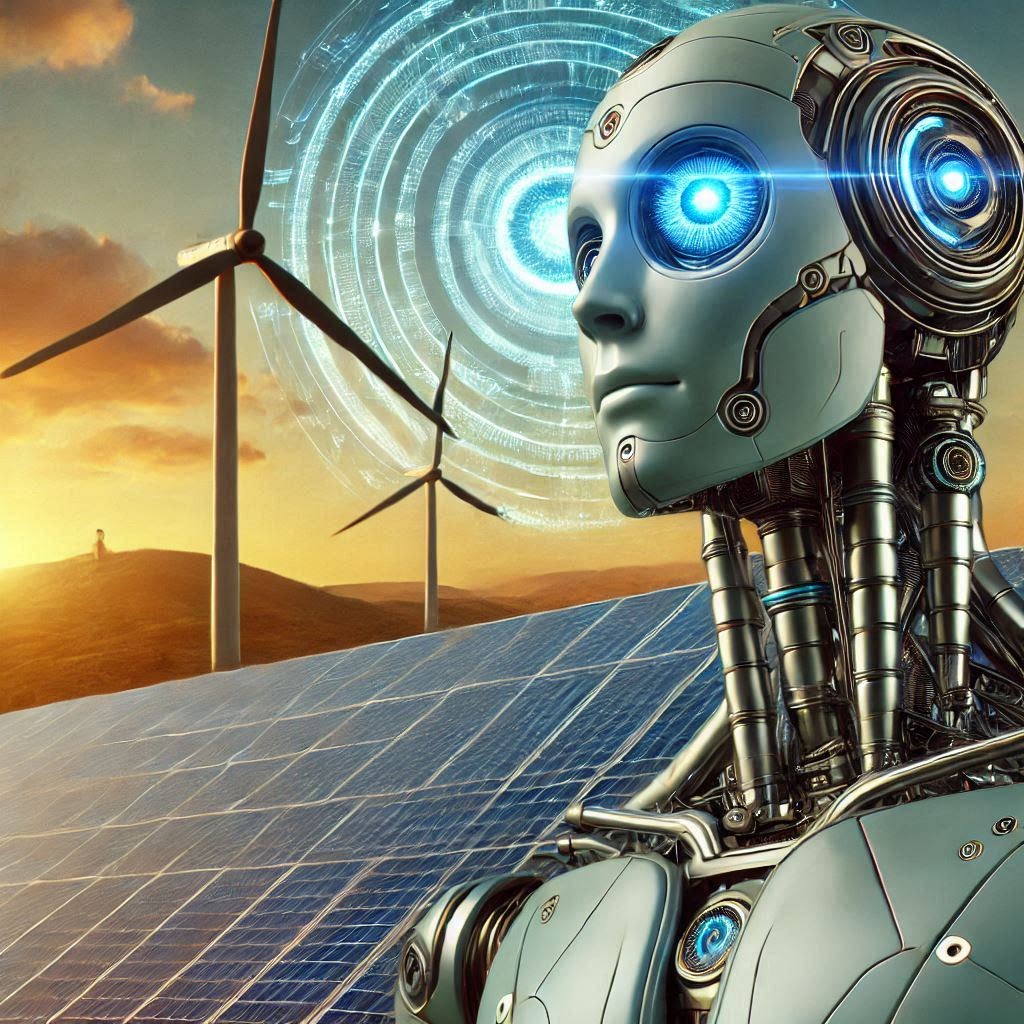
BBC World Service — How Green is AI?

Generated on request by Bing Image Creator.

I heard the first part of this at 2:30 am this morning on the BBC World Service, then fell asleep. Pioneering computer scientist Sasha Luccioni has just been announced as one of the people on the BBC 100 Women list. She was talking with presenter Zoe Kleinman about the increasing amounts of energy being used by AI. 

The BBC World Service originally broadcast on shortwave in Europe, but transmissions on the SW bands ceased in 2008. It also broadcast to Britain on MW. It still broadcasts on 198 kHz LW when BBC Radio 4 closes down at 1:00 am. This was useful for anyone with a bedside radio having an LW band. I've been listening to it and Radio 4 on and off since the 80s. However with the amount of electronic gadgets in a house nowadays generating EMI, including chargers, burglar alarms and broadband modems, that's increasingly difficult because of the interference. However next year it's planned that transmission will cease on LW, so we'll have to listen using an app or Internet enabled radio.

Sunday, December 08, 2024

Science Friday Podcast — Oliver Sacks Interview

Created on request by Bing Image Creator

In an interview from 2007, presenter Ira Flatow talks about the brain with the late Oliver Sacks, neurologist and author of Migraine and The Man Who Mistook his Wife for a Hat. The latter is a fascinating anthology of case studies of people with various neurological conditions, worth reading. The book is presented as a collection of 24 essays, dealing with loss of brain function and heightened abilities or skills in patients with autism or having prior exposure to drugs.

Wednesday, November 20, 2024

Science Friday Podcast — Prime Numbers

Image by Bing Image Creator

If you remember back to studying maths at school, you might recall that prime numbers are numbers that only be divided equally by themselves and the number one. So 2, 3, 5, 7 and 11 are primes. 4 isn't because it can be divided by the factors 1, 2 and 4. Prime numbers are important for cryptography and security of data and discovering new ones is challenge. Finding increasingly large primes takes time, even for computers, because a number has to be checked with numbers smaller than it to make sure they don't divide in evenly, making the number non-prime. In this podcast, Ira talks with Jack Murtagh, math writer and columnist for Scientific American, about why prime numbers are so cool, and the quest to find the largest one.

Big Picture Science Podcast — Beyond the Periodic Table

Public domain image via Pixabay.

Directly after the Big Bang, there were no elements as we know them today. So no hydrogen, helium, copper, gold, mercury, chlorine or any of the other 94 or so naturally occurring elements. There were just sub-atomic particles such as quarks and electrons. A few millionths of a second after the Big Bang, these aggregated to form protons and neutrons. Hydrogen is the most common element in the universe, simply because there's a greater probability of a single electron and proton coming together to form a hydrogen atom. Other elements are more complex, consisting of various arrangements of protons, neutrons and electrons in their atoms. For instance, the total number of protons and neutrons in a gold atom's nucleus is 197 and there are an additional 118 electrons in its outer shells. It's much less likely for over 300 random particles to come together to make up that arrangement, that's why gold is so relatively rare.
In this episode of Big Picture Science, the team discuss the history of the periodic table and how we're making new elements, some useful and others purely for research purposes (The radioactive isotope Americium 241 is commonly used in smoke alarms, others are used for radiotherapy). Guests include Jennifer Pore – Research Scientist of Heavy Elements at Lawrence Berkeley National Laboratory and Mark Miodownik – professor of materials and society at University College London and the author of “It’s a Gas: The Sublime and Elusive Elements That Expand Our World.”

Tuesday, November 05, 2024

5 Live Science Podcast — Modified Insulin That Can Be Switched Off

Image created using Bing Image Creator
Dr Chris Smith talks with Dr David B. Sacks from the US National Institutes of Health about a new form of insulin that switches itself off before blood glucose levels drop too low. This required a "switch" to be engineered into the molecule. Hormones are chemical messengers, but unlike nerves they act over a longer period. Normally insulin, a hormone made in the pancreas, is released to tell the body's cells to use glucose. But when glucose levels fall back to normal, insulin production reduces to compensate. Self-injected insulin can result in excessive insulin in the blood after blood glucose has fallen sufficiently, potentially making levels too low.

Monday, September 16, 2024

BPS Podcast - Not Just a Phage

Image courtesy Guido4. CC BY-SA 4.0 via Wikimedia Commons

We don't really know what life is. The best scientists can do is describe the attributes of living organisms, the most obvious and superficial being that they seem to have purpose in their actions, they eat or absorb nutrients from their environment and they reproduce.
Are advanced AI systems or even your phone "alive"?
Robots of the future will probably be incredibly complex and already some robots are autonomous meaning they can be given a general task and can go off and work out how to do that themselves. The Perseverance rover on Mars is semi-autonomous and has purpose, its task being to search for evidence of past microbial life. While not reproducing biologically, future robots may be capable of replicating themselves using raw materials they source. But does that make them alive? Single celled organisms like bacteria "feed" by absorbing nutrients through their outer walls or cell membranes. Bacteria are thought to be living because they satisfy the criteria for life. However the jury's out for viruses as they can't do anything useful on their own and simply consist of virus particles called virions, made from strands of RNA or DNA. To reproduce, they must infect a host cell, causing the machinery of the cell to make thousands of copies of the virus which then emerge to infect more cells. Bacteriophages or simply phages are types of viruses that infect bacteria and archaea (single celled organisms without a nucleus). Treatment of diseases with phages that could destroy infectious bacteria was a practice once used in the early part of the 20th century but the development of new antibiotics over the decades meant that phage treatment was sidelined. However the appearance of antibiotic-resistant bacteria (something predicted by Alexander Fleming who discovered penicillin in 1928) in the late 20th century and the slowdown of discovery of new antibiotics prompted the WHO in 2017 to highlight the need for new approaches to treating disease.
In this Big Picture Science podcast from the SETI Institute, the team investigate bacteriophage treatment to combat the antibiotic crisis.

Wednesday, May 29, 2024

Big Picture Science Podcast — Nuts and Bolts

Image generated by AI using Bing Image Creator

SETI Astronomer Seth Shostak and producer Molly Bentley talk to Roma Agrawal about her book Nuts and Bolts: Seven Small Inventions That Changed the World in a Big Way in which she explores fasteners, pumps and some of the other inventions which shaped our world.

You may remember Seth Shostak from the epic 80s documentary series about space, Cosmos, written and presented by astronomer Carl Sagan. Seth occasionally featured in discussions about life on other planets and the SETI program (Search for Extraterrestrial Intelligence)

Monday, April 29, 2024

5 Live Science Podcast — Artificial Pancreas

Image © Eugene Brennan

This week's program featured a segment about an "artificial pancreas" for Type 1 diabetes sufferers, which uses a closed loop control system to monitor blood glucose and administer a dose from an insulin pump.

What's a Closed Loop, Negative Feedback Control System?

Many systems use close loop control with negative feedback to control an output of interest. An example is the speed control on small engines, e.g. the one on your petrol lawn mower. If you run into longer grass, this slows down the blade and engine. To reduce the change in rotational speed (the output variable) and keep it at a setpoint (typically 3000 RPM for a mower), a governor is used. A vane, mounted adjacent to the engine's cooling fan that's integral to the flywheel, forms part of the governor mechanism. When the fan slows down, it blows less air onto the vane. The vane is connected via a linkage to a butterfly valve in the carburetor. This valve forms part of the throttle mechanism and as the valve opens up due to movement of the vane, more air/fuel mixture enters the engine. This generates more power which tends to compensate for the slowdown of the blade due to the long grass. Other systems use negative feedback and closed loop control, e.g. your phone charger which has electronics to keep the output at 5 V DC, irrespective of load. Without a voltage regulator, all power sources, including batteries, experience a voltage drop as they're loaded and more current drawn from them. Voltage stabilisation by a regulator is necessary so that the electronics in your phone for instance works in a predictable manner. Other examples of feedback control systems are servos on vehicles and aircraft and temperature and pressure control in industrial processes.

Why Negative Feedback and Not Positive Feedback?

The function of a feedback control system is to keep an output variable at a fixed or variable setpoint, irrespective of load. So in the lawn mower example the speed was the parameter that needed to be kept stable. In negative feedback, the actual speed is fed back and subtracted from the desired speed (the setpoint) to create an error signal. This error, via a controlled variable, drives the system in a direction to bring the output closer to the setpoint. In the lawnmower example, the controlled variable was the fuel. The term negative feedback comes from the subtraction that's involved. Positive feedback on the other hand causes the fed back signal to add to the set point, resulting in instability and the output diverging from a setpoint (e.g. positive feedback in a PA system, causing the squealing from loudspeakers). Many of the systems in our bodies are negative feedback control systems and like any control system if not tuned properly, there can be oscillations and instability. Hence the wobbling from side to side when we're learning to ride a bike!
 

Friday, February 16, 2024

Science Friday — The Positives of AI

Image created with Bing Image Creator
Using AI to read diagnostic images, develop new drugs, predict diseases by examining the retina and more. Science Friday presenters Ira Flatlow and Sophie Bushwick talk with cardiologist and professor of Molecular Medicine Eric Topol, founder and director of the Scripps Research Translational Institute in La Jolla, California.

Wednesday, February 14, 2024

Science Friday — How Close Are We to Answers About Aliens?

AI image generated by Bing Image Creator

The next generation of space telescopes will directly image exoplanets (planets outside our solar system) and possibly detect biosignatures of alien life on these planets. This involves looking at the spectrum of light emitted by a planet and detecting characteristic lines which indicate the presence of oxygen, methane and other compounds produced by living organisms. Currently, we can only detect planets indirectly by observing the tiny dip in light output of a star as a planet passes in front of it. Another method is to detect the wobble in a star's position as a planet orbits around it. In this Science Friday podcast, Dr. Adam Frank, a professor of astrophysics at the University of Rochester joins hosts Ira Flatow and Kathleen Davis to talk about the evidence for life elsewhere in the universe.

×

Posts by Category